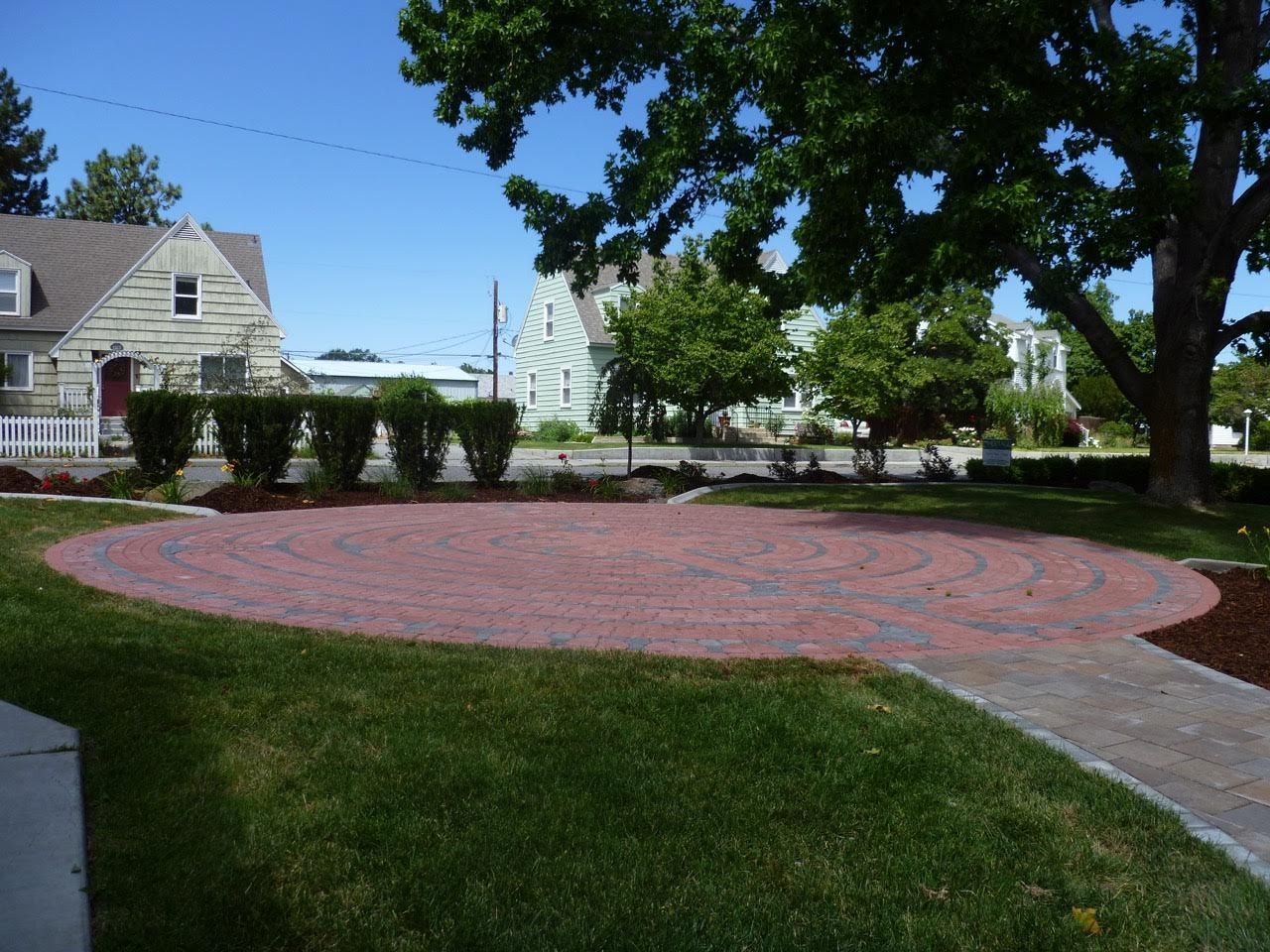
A labyrinth is one of the oldest meditative tools in existence. The designs of some labyrinths go back thousands of years; the earliest evidence of Christian use dates to the 4th century. All Saints’ labyrinth design is based on one installed at Chartres Cathedral in France in A.D. 1201.
A labyrinth is a pilgrimage in miniature. A pilgrimage—an intentional journey to a sacred place or for a sacred purpose— is a common metaphor and image. It is one way of making an intentional effort to honor and strengthen one’s relationship with God, and to listen for the movement of the Holy Spirit. It is a tool for self-guided meditation and a focus for soul-searching and prayer. It functions as a symbolic path leading from the world to God, from the human to the divine.
Many people confuse a labyrinth with a maze, but the two are not the same. A maze has multiple paths, some of which diverge and lead into blind alleys and dead ends. It is an intellectual task in which you have to use your brain to figure out how to get on the right path to exit the maze. A labyrinth, on the other hand, has only a single path: one way in and one way out. The winding path leads to the center, mirroring and reflecting the movement of the Spirit in our lives. There are twists and turns, but no tricks or dead ends. It is intended to be a walk with a heart and mind open to Christ, inviting the Holy into one’s spiritual journey.